.
.
.
Hi everyone ! See, haven't disappeared from here entirely, but as mentioned earlier, my new mistress Facebook is rather demanding. She keeps requiring gifts of time, and pearls, diamonds, chateaux, sailboats, etc. So I am struggling to keep her happy. If you want to see what I mean, just open your FB account, I know you all secretly have one, and "Like" my page named oddly enough : "Owen Phillips Photography France".
.
I had to add "France" on the name because there is another photographer who you can find on Google named Owen Phillips in the UK, who does some great work. By strange coincidence he even has the same middle name as me. And is an acoustic guitar folk musician, also like me, if I could go so far to claim the title of musician. That is a fairly large assumption.
.
Was able these past days to get out and wander in a few cemeteries. The two photos here are very recent, the first from Gentilly Cemetery, on the south edge of Paris, the second from Pantin Cemetery, the largest cemetery in all of France, just outside Paris to the northeast. A father and his son killed in World War One. A mother and her daughter who died far too young. Why post such images during the holidays ? Well, for me, they contain strong messages about loving those who are close to you, while you can. For time on Earth is often far shorter for many people than it should be. One never knows when one will have to go.
.
Happy Holidays to all ! And I'm very sorry to do so, but I finally turned on the word verification on comments, just far too much spam coming in. Am tired of having to delete it all every time I open blogger. I hate Google's bloody word verification, half the time I can't even read the numbers and some of the letters. But the spam senders can't either, so they lose. Cheers !
.
.
.
.
.
.
.
.
.
.
.
.
.
.
.
.
Showing posts with label world war one. Show all posts
Saturday, December 29, 2012
Sunday, November 11, 2012
Armistice Day . . . In Memory . . .
.
.
.
Armistice Day on November 11th in France marks the end of the First World War, and for the USA it is Veterans Day, and Remembrance Day for the UK. The other day I was a little over an hour early for a train leaving from la Gare Montparnasse to go out to Brittany, so I took a stroll through parts of Montparnasse Cemetery to see what I could see. Following my feet where they might lead me, by chance I stumbled on some interesting bits of history related to la Grande Guerre, pertinent for posting on Armistice Day.
.
This first photo shows the tomb of Marie Joseph Eugene Bridoux, who was the first French General killed in the war in September 1914. His son and a grandson were also officers in the French Army, both of them stayed loyal to the Petain government in Vichy during the Second World War, collaborating with the Germans. The son fled to Spain after the war, and was sentenced to death in absentia by France in 1948. The grandson who served with a unit under the Germans in WWII known as the LVF, or Legion of French Volunteers, died in 1945 in Germany. One can only imagine how General Bridoux, buried in Montparnasse after his heroic death in battle, killed by a German bullet, might have felt about his son and grandson collaborating with the Nazis.
.
.
.
.
.
.
.
.
.
Not far from General Bridoux is the tomb of Armand Cahen, a second lieutenant in an artillery regiment, who died in 1920 at the age of 22, after being awarded the War Cross (Croix de Guerre) for bravery during a heavy shelling attack in June 1918 where toxic gas shells were used. His memorial was quite elaborate, between the large marble sculpture of him and the stone and stained glass enclosure it stands in. I stayed there for a long moment in reverence, and was pondering his fate when the sun came out from behind some clouds, sending bright rays through the stained glass to bathe the white stone bust in red and green light, transforming him.
.
.
.
.
.
.
.
.
.
.
.
.
.
.
.
.
.
.
.
.
.
.
.
.
Nearby stands a large structure built over the grave of another artillery officer, Marcel Suss, killed in the very early days of the war.
.
.
.
.
.
.
.
.
I had gotten up fairly close to the glass doors of the monument to see the reflected clouds in the glass, when I realized there was a stained glass portrait of Lieutenant Suss in the back wall of the tomb. In all my years of exploring cemeteries, keeping my eyes open for the unusual, I've never seen anything quite like this colorful work on glass with a fine portrait of the deceased.
.
.
.
.
.
.
.
.
A bit further on was one tomb for two brothers killed in the war, the first at Verdun in 1916, and the younger brother in Belgium in October 1918; just a few weeks before the end of the war.
.
.
.
.
.
.
.
.
This camouflaged, chameleon like crucifixion figure was spotted on a gravestone the day previous to the photos from Montparnasse above, in a village near Amiens. I've never seen a Christ figure like this blending in so perfectly with the background. The spot of lichen on his chest seems to form an inverted heart. A minor miracle there ?
.
.
.
.
.
.
.
.
On another grave in the same cemetery a piece of cast iron which fell from an ornate but deteriorating cross above seemed to form a question mark against the cold wet stone it was lying on. Indeed, so many unanswered questions about war and death, rusting iron and lichen on stone, passing time and passing lives. May your Armistice/Remembrance/Veterans Day be rich in reflections.
.
.
.
.
.
.
.
.
.
As one of the photos above has a reflection of blue sky, cloud, and tree in a glass door, am linking this to James' Weekend Reflections, where I've been too long absent.
.
.
.
.
Armistice Day on November 11th in France marks the end of the First World War, and for the USA it is Veterans Day, and Remembrance Day for the UK. The other day I was a little over an hour early for a train leaving from la Gare Montparnasse to go out to Brittany, so I took a stroll through parts of Montparnasse Cemetery to see what I could see. Following my feet where they might lead me, by chance I stumbled on some interesting bits of history related to la Grande Guerre, pertinent for posting on Armistice Day.
.
This first photo shows the tomb of Marie Joseph Eugene Bridoux, who was the first French General killed in the war in September 1914. His son and a grandson were also officers in the French Army, both of them stayed loyal to the Petain government in Vichy during the Second World War, collaborating with the Germans. The son fled to Spain after the war, and was sentenced to death in absentia by France in 1948. The grandson who served with a unit under the Germans in WWII known as the LVF, or Legion of French Volunteers, died in 1945 in Germany. One can only imagine how General Bridoux, buried in Montparnasse after his heroic death in battle, killed by a German bullet, might have felt about his son and grandson collaborating with the Nazis.
.
.
.
.
.
.
.
.
.
Not far from General Bridoux is the tomb of Armand Cahen, a second lieutenant in an artillery regiment, who died in 1920 at the age of 22, after being awarded the War Cross (Croix de Guerre) for bravery during a heavy shelling attack in June 1918 where toxic gas shells were used. His memorial was quite elaborate, between the large marble sculpture of him and the stone and stained glass enclosure it stands in. I stayed there for a long moment in reverence, and was pondering his fate when the sun came out from behind some clouds, sending bright rays through the stained glass to bathe the white stone bust in red and green light, transforming him.
.
.
.
.
.
.
.
.
.
.
.
.
.
.
.
.
.
.
.
.
.
.
.
.
Nearby stands a large structure built over the grave of another artillery officer, Marcel Suss, killed in the very early days of the war.
.
.
.
.
.
.
.
.
I had gotten up fairly close to the glass doors of the monument to see the reflected clouds in the glass, when I realized there was a stained glass portrait of Lieutenant Suss in the back wall of the tomb. In all my years of exploring cemeteries, keeping my eyes open for the unusual, I've never seen anything quite like this colorful work on glass with a fine portrait of the deceased.
.
.
.
.
.
.
.
.
A bit further on was one tomb for two brothers killed in the war, the first at Verdun in 1916, and the younger brother in Belgium in October 1918; just a few weeks before the end of the war.
.
.
.
.
.
.
.
.
This camouflaged, chameleon like crucifixion figure was spotted on a gravestone the day previous to the photos from Montparnasse above, in a village near Amiens. I've never seen a Christ figure like this blending in so perfectly with the background. The spot of lichen on his chest seems to form an inverted heart. A minor miracle there ?
.
.
.
.
.
.
.
.
On another grave in the same cemetery a piece of cast iron which fell from an ornate but deteriorating cross above seemed to form a question mark against the cold wet stone it was lying on. Indeed, so many unanswered questions about war and death, rusting iron and lichen on stone, passing time and passing lives. May your Armistice/Remembrance/Veterans Day be rich in reflections.
.
.
.
.
.
.
.
.
.
As one of the photos above has a reflection of blue sky, cloud, and tree in a glass door, am linking this to James' Weekend Reflections, where I've been too long absent.
.
.
Labels:
Cemeteries,
Graveyards,
traces grande guerre,
world war one
Saturday, November 3, 2012
Armistice Day Arriving
.
.
.
The 94th anniversary of the end of World War One is coming up on November 11th, a national holiday here in France. A fitting time to post a few photos from a couple of sites I had the good fortune to visit recently, thanks to a chance meeting at a stone quarry in the middle of nowhere with two gentlemen also interested the history of what was called "la Grande Guerre"... the Great War. Near the town of Noyon the ruins of a chapel destroyed during the war still remain, with a cast iron Christ within which fell during the shelling. As he suffered some 2000 years ago, so too did his replica suffer nearly 100 years ago in this chapel which stood immediately adjacent to the trenches of the front lines. It is surprising the sculpture was not more heavily damaged, as artillery shells fell like rain in that area.
.
.
.
.
.
.
.
.
.
.
.
.
.
.
.
.
.
.
.
.
.
.
.
.
.
.
.
.
.
.
.
.
.
.
More cast iron work in the chapel, with autumn colors, and the iron Crucifixion figure at upper left.
.
.
.
.
.
.
.
In the cemetery at Thiescourt, also near the front lines, a memorial to those dreadful years... 1914 to 1918.
.
.
.
.
.
.
.
.
.
The gate to the German cemetery at Thiescourt.
.
.
.
.
.
.
.
.
During the first world war the German army allowed soldiers of Jewish faith to serve. Things would change not long thereafter.
.
.
.
.
.
.
.
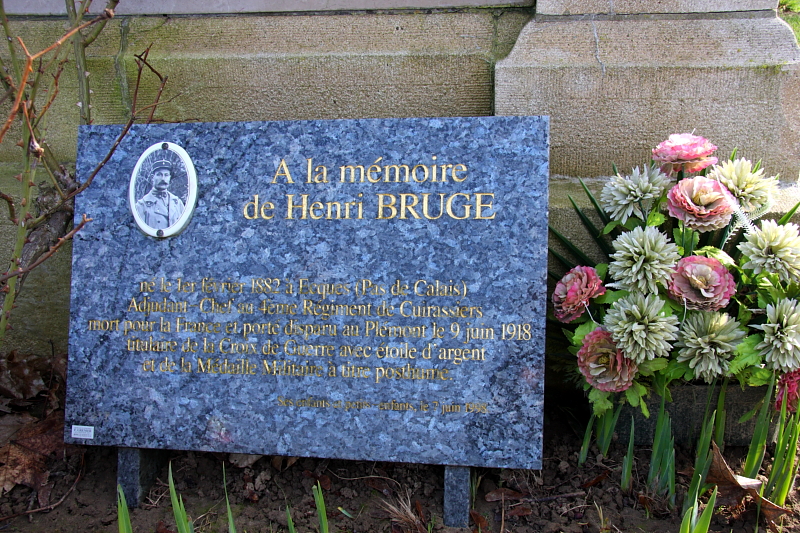
.
"To the memory of Henri Bruge. Born the 1st of February 1882 at Ergues in the Pas de Calais, Adjutant Chef in the 4th Regiment of Cuirassiers, died for France, reported missing in action at Plémont on 9 June1918, awarded the War Cross with silver star and the Military Medal posthumously"
.
.
.
.
.
.
.
.
At the entrance to the old stone quarries near Dreslincourt, occupied by the Germans for three years during the war. They left Gothic inscriptions carved on the outside stone walls, later shattered when they tried to blow up a nearby entrance to the quarry. The words carved here were part of a poem, saying :
.
"The world might be torn apart
Every oath like straw
I know a word like iron
It's called soldiers loyalty"
.
In German "soldiers loyalty" was one word : Soldatentreu
.
.
.
.
.
.
.
.
Another German sign carved above an entrance to the stone quarries, a labyrinthine series of tunnels that go on for kilometers underground... it would be very easy to get lost in there. I was lucky to have a good guide who knew the place well.
.
.
.
.
.
.
.
.
Graffiti from the war years... they didn't have spray paint cans back then, so they carved instead.
.
.
.
.
.
.
.
In the woods outside unexploded artillery shells can still be found lying about. Chilling reminders of the not so distant past here.
.
.
.
.
.
.
.
.
An imperial eagle carved on an exterior quarry wall.
.
.
.
.
.
.
.
.
.
More German, to the effect that the German soldiers feared only God.
.
.
.
.
.
.
.
.
Inside the miles of tunnels there were signposts, here indicating the way to the Command Post Calypso.
.
.
.
.
.
.
.
.
Boots from the war still remain undisturbed deep in the tunnels.
.
.
.
.
.
.
.
.
A wonderful French rooster carved on a wall to honor the 324th Infantry Regiment.
.
.
.
.
.
.
.
.
Near one of the entrances to the quarry tunnels.
.
.
.
.
.
.
.
.
German barbed wire from the war, rusting but still ready to unroll and use apparently. Maybe a bit fragile now, but still looking nasty.
.
.
.
.
.
.
.
.
More artillery shells found in farm fields nearby, waiting to be collected by the munitions disposal service which still remains busy nearly 100 years later.
.
.
.
.
.
.
.
.
.
.
.
.
The 94th anniversary of the end of World War One is coming up on November 11th, a national holiday here in France. A fitting time to post a few photos from a couple of sites I had the good fortune to visit recently, thanks to a chance meeting at a stone quarry in the middle of nowhere with two gentlemen also interested the history of what was called "la Grande Guerre"... the Great War. Near the town of Noyon the ruins of a chapel destroyed during the war still remain, with a cast iron Christ within which fell during the shelling. As he suffered some 2000 years ago, so too did his replica suffer nearly 100 years ago in this chapel which stood immediately adjacent to the trenches of the front lines. It is surprising the sculpture was not more heavily damaged, as artillery shells fell like rain in that area.
.
.
.
.
.
.
.
.
.
.
.
.
.
.
.
.
.
.
.
.
.
.
.
.
.
.
.
.
.
.
.
.
.
.
More cast iron work in the chapel, with autumn colors, and the iron Crucifixion figure at upper left.
.
.
.
.
.
.
.
In the cemetery at Thiescourt, also near the front lines, a memorial to those dreadful years... 1914 to 1918.
.
.
.
.
.
.
.
.
.
The gate to the German cemetery at Thiescourt.
.
.
.
.
.
.
.
.
During the first world war the German army allowed soldiers of Jewish faith to serve. Things would change not long thereafter.
.
.
.
.
.
.
.
.
"To the memory of Henri Bruge. Born the 1st of February 1882 at Ergues in the Pas de Calais, Adjutant Chef in the 4th Regiment of Cuirassiers, died for France, reported missing in action at Plémont on 9 June1918, awarded the War Cross with silver star and the Military Medal posthumously"
.
.
.
.
.
.
.
.
At the entrance to the old stone quarries near Dreslincourt, occupied by the Germans for three years during the war. They left Gothic inscriptions carved on the outside stone walls, later shattered when they tried to blow up a nearby entrance to the quarry. The words carved here were part of a poem, saying :
.
"The world might be torn apart
Every oath like straw
I know a word like iron
It's called soldiers loyalty"
.
In German "soldiers loyalty" was one word : Soldatentreu
.
.
.
.
.
.
.
.
Another German sign carved above an entrance to the stone quarries, a labyrinthine series of tunnels that go on for kilometers underground... it would be very easy to get lost in there. I was lucky to have a good guide who knew the place well.
.
.
.
.
.
.
.
.
Graffiti from the war years... they didn't have spray paint cans back then, so they carved instead.
.
.
.
.
.
.
.
In the woods outside unexploded artillery shells can still be found lying about. Chilling reminders of the not so distant past here.
.
.
.
.
.
.
.
.
An imperial eagle carved on an exterior quarry wall.
.
.
.
.
.
.
.
.
.
More German, to the effect that the German soldiers feared only God.
.
.
.
.
.
.
.
.
Inside the miles of tunnels there were signposts, here indicating the way to the Command Post Calypso.
.
.
.
.
.
.
.
.
Boots from the war still remain undisturbed deep in the tunnels.
.
.
.
.
.
.
.
.
A wonderful French rooster carved on a wall to honor the 324th Infantry Regiment.
.
.
.
.
.
.
.
.
Near one of the entrances to the quarry tunnels.
.
.
.
.
.
.
.
.
German barbed wire from the war, rusting but still ready to unroll and use apparently. Maybe a bit fragile now, but still looking nasty.
.
.
.
.
.
.
.
.
More artillery shells found in farm fields nearby, waiting to be collected by the munitions disposal service which still remains busy nearly 100 years later.
.
.
.
.
.
.
.
.
.
.
Monday, October 15, 2012
Return to the Future Past . . .
.
.
.
Here are a few more photos from the same site that the photo currently entered in a contest was taken at (see below post, and please vote), out in a stretch of woods in northern France that not many people ever visit, where there are dozens of large sculptures carved in the stone of an old quarry, which date from the First World War. You can also see more pictures of this site here. Sadly, this little known site is out in a remote forest, exposed to the weather, and the magnificent artwork here is slowly but surely disappearing. I'm going back there tomorrow to make another series of photos to help document what's left. Wish you could come...
.
.
.
.
.
.
.
.
.
.
.
.
.
.
.
.
.
.
.
.
.
.
.
.
.
.
.
.
.
.
.
.
.
.
.
.
.
.
.
.
.
.
.
.
.
.
.
.
.
.
.
.
.
.
.
.
.
.
.
.
.
.
.
.
.
.
.
.
.
.
.
.
.
.
.
.
.
.
.
.
.
.
.
.
.
.
.
.
.
.
.
.
.
.
Here are a few more photos from the same site that the photo currently entered in a contest was taken at (see below post, and please vote), out in a stretch of woods in northern France that not many people ever visit, where there are dozens of large sculptures carved in the stone of an old quarry, which date from the First World War. You can also see more pictures of this site here. Sadly, this little known site is out in a remote forest, exposed to the weather, and the magnificent artwork here is slowly but surely disappearing. I'm going back there tomorrow to make another series of photos to help document what's left. Wish you could come...
.
.
.
.
.
.
.
.
.
.
.
.
.
.
.
.
.
.
.
.
.
.
.
.
.
.
.
.
.
.
.
.
.
.
.
.
.
.
.
.
.
.
.
.
.
.
.
.
.
.
.
.
.
.
.
.
.
.
.
.
.
.
.
.
.
.
.
.
.
.
.
.
.
.
.
.
.
.
.
.
.
.
.
.
.
.
.
.
.
.
.
.
Saturday, February 18, 2012
Abbaye de Vauclair . . .
.
.
.
One day this past November we set out for an afternoon in an area known as the Chemin des Dames, to the northeast of the city of Soissons, which was heavily fought over during World War One. The road in question was named "le Chemin des Dames" because it was built in the 1780's at the request of the daughters of Louis XV, who were called "Mesdames", who wanted a better road to get to the Chateau de la Bove at Bouconville than the muddy tracks that existed previously.
.
Along the Chemin des Dames there are fourteen French military cemeteries, and ten German cemeteries. These first two photos show one of the German cemeteries near the western end of that historic road.
.
.
.
.
.
.
.
.
.
.
.
.
.
Monuments of various sorts abound in the area...
.
.
.
.
.
.
.
.
.
.
On a stone wall around the farm at Hurtebise two plaques can be seen, the first commemorating events there in WWI, the second for a battle in May 1940. Many ghosts reside there...
.
.
.
.
.
.
.
.
.
.
.
Just north of the Chemin des Dames lie the ruins of the Abbey of Vauclair, which was destroyed by artillery fire during WWI. The ruins now lie quietly, off the beaten track, another testimonial, as if any were needed, to the idiocy of war.
.
.
.
.
.
.
.
.
.
.
.
.
.
.
.
.
.
.
.
.
.
.
.
.
.
.
Lichen on Abbey stone here seemed to be forming a heart...
.
.
.
.
.
.
.
.
.
.
.
.
.
.
.
.
.
.
.
.
.
.
.
.
.
.
.
.
.
.
.
.
.
.
.
.
.
.
.
.
One day this past November we set out for an afternoon in an area known as the Chemin des Dames, to the northeast of the city of Soissons, which was heavily fought over during World War One. The road in question was named "le Chemin des Dames" because it was built in the 1780's at the request of the daughters of Louis XV, who were called "Mesdames", who wanted a better road to get to the Chateau de la Bove at Bouconville than the muddy tracks that existed previously.
.
Along the Chemin des Dames there are fourteen French military cemeteries, and ten German cemeteries. These first two photos show one of the German cemeteries near the western end of that historic road.
.
.
.
.
.
.
.
.
.
.
.
.
.
Monuments of various sorts abound in the area...
.
.
.
.
.
.
.
.
.
.
On a stone wall around the farm at Hurtebise two plaques can be seen, the first commemorating events there in WWI, the second for a battle in May 1940. Many ghosts reside there...
.
.
.
.
.
.
.
.
.
.
.
Just north of the Chemin des Dames lie the ruins of the Abbey of Vauclair, which was destroyed by artillery fire during WWI. The ruins now lie quietly, off the beaten track, another testimonial, as if any were needed, to the idiocy of war.
.
.
.
.
.
.
.
.
.
.
.
.
.
.
.
.
.
.
.
.
.
.
.
.
.
.
Lichen on Abbey stone here seemed to be forming a heart...
.
.
.
.
.
.
.
.
.
.
.
.
.
.
.
.
.
.
.
.
.
.
.
.
.
.
.
.
.
.
.
.
.
.
.
.
.
.
Labels:
Abandoned Buildings,
world war one
Subscribe to:
Posts (Atom)