.
.
.
What's not to love about a window like this one ?
.
.
.
.
.
.
.
.
Or a door like this ?
.
.
.
.
.
.
.
.
Or a hand-painted wall ?
.
.
.
.
.
.
.
Or a sign like this ?
.
.
.
.
.
.
.
.
Seems to be a lot of visual poetry out there yet.
.
.
Showing posts with label Dream House. Show all posts
Wednesday, September 12, 2012
Tuesday, August 14, 2012
Bisoux From Brittany . . .
.
.
.
Twenty six years ago I set out on a bicycle from Saint Brieuc in Brittany, and rode along the coast from there for ten days heading north and west through Paimpol to Perros Guirrec. On the second day out I discovered by chance near the village of Plougrescant a house wedged between two much larger rocks. With the camera I was using at the time, shooting black and white film, I took a picture of the place which you can see here, posted in the very early days of this blog. Yesterday, again more or less by chance, I returned to that magical place, and made a new photograph from nearly the exact spot as the one from 26 years ago. As you can see, not much has changed.
.
.
.
.
.
.
.
.
A few moments later it started to rain, speckling the water with drops, as visible below. Within a minute or so, the sky broke open, unleashing a torrential downpour that had me running for the car under an umbrella to protect the camera. Was drenched from the waist down by the time we were able to get back into the haven of the automobile.
.
.
.
.
.
.
.
Just before getting up to the house between the rocks on the seashore, we stopped in a small church in Plougrescant, where there were lions waiting to greet us under the tomb of an early religious figure from centuries ago. And there was a pile of wood chairs in a corner in case they might be needed to keep the lions at bay.
.
.
.
.
.
.
.
.
.
.
.
.
.
.
.
.
.
.
Not much later in the afternoon the wind from the west had driven the rain away, giving place to fluffy clouds and sunshine when we went to visit the nearby Chateau de Keralio, with its portraits of ancestors on the walls and cherubs in the chapel.
.
.
.
.
.
.
.
.
.
.
.
.
.
.
.
.
.
.
.
.
.
.
.
.
.
.
Oh, PS, in the title of this post, the word "Bisoux", in case you were wondering, is French for "hugs and kisses"...
.
.
.
.
Twenty six years ago I set out on a bicycle from Saint Brieuc in Brittany, and rode along the coast from there for ten days heading north and west through Paimpol to Perros Guirrec. On the second day out I discovered by chance near the village of Plougrescant a house wedged between two much larger rocks. With the camera I was using at the time, shooting black and white film, I took a picture of the place which you can see here, posted in the very early days of this blog. Yesterday, again more or less by chance, I returned to that magical place, and made a new photograph from nearly the exact spot as the one from 26 years ago. As you can see, not much has changed.
.
.
.
.
.
.
.
.
A few moments later it started to rain, speckling the water with drops, as visible below. Within a minute or so, the sky broke open, unleashing a torrential downpour that had me running for the car under an umbrella to protect the camera. Was drenched from the waist down by the time we were able to get back into the haven of the automobile.
.
.
.
.
.
.
.
Just before getting up to the house between the rocks on the seashore, we stopped in a small church in Plougrescant, where there were lions waiting to greet us under the tomb of an early religious figure from centuries ago. And there was a pile of wood chairs in a corner in case they might be needed to keep the lions at bay.
.
.
.
.
.
.
.
.
.
.
.
.
.
.
.
.
.
.
Not much later in the afternoon the wind from the west had driven the rain away, giving place to fluffy clouds and sunshine when we went to visit the nearby Chateau de Keralio, with its portraits of ancestors on the walls and cherubs in the chapel.
.
.
.
.
.
.
.
.
.
.
.
.
.
.
.
.
.
.
.
.
.
.
.
.
.
.
Oh, PS, in the title of this post, the word "Bisoux", in case you were wondering, is French for "hugs and kisses"...
.
.
Labels:
Bretagne,
Brittany,
Dream House,
lions
Tuesday, October 11, 2011
Doors to Other Worlds . . .
.
.
.
Life is often composed as much by things that might have been, but were not, as by things that were. As each day slips into the irretrievable past, memories take on dream like qualities. Was I really there ? Do these photographs tell the truth, these stolen moments in time ?
.
I often see doors I want to open, doors beyond which lie worlds to discover, the vast, infinite worlds of the other, he or she who we will never know. So many of those doors are locked, and no one is home. No key can be found. Rare is the door that opens into the warm kitchen of another, where a bowl of soup stands steaming on a rough hewn table. Where a story awaits the traveller.
.
These virtual doors we call blogs, sometimes they open into the rich new universe of a perfect stranger. Sometimes doors that seemed to open swing shut again without warning. Some blogs just disappear, leaving no forwarding address. A light goes out. A voice goes silent. A door is shut and locked. A key is lost. I guess that's life, and trying to make sense of it may not always bring any satisfaction. My warmest wishes to the open doors out there, may your candles burn brightly in the night.
.
I cannot help but wonder though sometimes, what treasures lie beyond these closed doors.
.
.
.
.
.
.
.
.
.
.
.
.
.
.
.
.
.
.
.
.
.
.
.
.
.
.
.
.
.
.
.
.
.
.
.
.
.
.
.
.
.
.
.
.
.
.
.
.
.
.
.
.
.
.
.
.
.
.
.
.
.
.
.
.
.
.
.
.
.
.
.
.
.
.
.
.
.
Life is often composed as much by things that might have been, but were not, as by things that were. As each day slips into the irretrievable past, memories take on dream like qualities. Was I really there ? Do these photographs tell the truth, these stolen moments in time ?
.
I often see doors I want to open, doors beyond which lie worlds to discover, the vast, infinite worlds of the other, he or she who we will never know. So many of those doors are locked, and no one is home. No key can be found. Rare is the door that opens into the warm kitchen of another, where a bowl of soup stands steaming on a rough hewn table. Where a story awaits the traveller.
.
These virtual doors we call blogs, sometimes they open into the rich new universe of a perfect stranger. Sometimes doors that seemed to open swing shut again without warning. Some blogs just disappear, leaving no forwarding address. A light goes out. A voice goes silent. A door is shut and locked. A key is lost. I guess that's life, and trying to make sense of it may not always bring any satisfaction. My warmest wishes to the open doors out there, may your candles burn brightly in the night.
.
I cannot help but wonder though sometimes, what treasures lie beyond these closed doors.
.
.
.
.
.
.
.
.
.
.
.
.
.
.
.
.
.
.
.
.
.
.
.
.
.
.
.
.
.
.
.
.
.
.
.
.
.
.
.
.
.
.
.
.
.
.
.
.
.
.
.
.
.
.
.
.
.
.
.
.
.
.
.
.
.
.
.
.
.
.
.
.
.
.
.
Thursday, October 6, 2011
A Most Beautiful Place . . .
.
.
.
I'm not sure that I will be able to find any words to express what I felt when I stumbled on this magical place. I had sought it out, it is true, having seen symbols on a map which suggested there might be something worth seeing there. Symbols of the slightest, vaguest sort, which simply indicated a handful of ruins. But oh, the distance between maps and reality can be infinite. No map could have prepared me for the sight of these ruins as we came over a crest of ground and beheld them there, where they stand in majestic silence, near the edge of a high cliff, overlooking a deep valley beyond.
.
Hundreds of years ago men from the valley below climbed those cliffs, found a path to the plateau above, and built these rudimentary, rustic shelters where they could pass the summers peacefully alone with their small herds of sheep and goats, in an idyllic, remote, thoroughly secret place. Their women from the village in the valley would have made the hike up there as well to keep the men company, bringing food and other supplies. Who could imagine the summer nights under star filled skies there, a fire burning, the smell of sheep, their wool, milk for cheese-making. Who were these people ? Of what did they die, where are they buried ? And how did they live ? No electricity, no computers, no phones, just survival at hand. Work or starve.
.
And yet they built with beauty and grace; arches that still stand when all the stones around have fallen, conquered by gravity. The sense of wonder I felt there, almost overwhelming, is unlike anything I've ever felt, anywhere. This was real. This was alive. Though no one lives there today, the place never died. It will haunt me for a long time to come, maybe forever. Already I want to go back there. To just sit quietly among those stones.
.
.
.
.
.
.
.
.
.
.
.
.
.
.
.
.
.
.
.
.
.
.
.
.
.
.
.
.
An ancient iron hinge piece to hold up a shutter, long ago disintegrated.
.
.
.
.
.
.
.
A butterfly on an acanthus bloom, looking as though he'd flown through a storm.
.
.
.
.
.
.
.
.
.
.
.
I'm not sure that I will be able to find any words to express what I felt when I stumbled on this magical place. I had sought it out, it is true, having seen symbols on a map which suggested there might be something worth seeing there. Symbols of the slightest, vaguest sort, which simply indicated a handful of ruins. But oh, the distance between maps and reality can be infinite. No map could have prepared me for the sight of these ruins as we came over a crest of ground and beheld them there, where they stand in majestic silence, near the edge of a high cliff, overlooking a deep valley beyond.
.
Hundreds of years ago men from the valley below climbed those cliffs, found a path to the plateau above, and built these rudimentary, rustic shelters where they could pass the summers peacefully alone with their small herds of sheep and goats, in an idyllic, remote, thoroughly secret place. Their women from the village in the valley would have made the hike up there as well to keep the men company, bringing food and other supplies. Who could imagine the summer nights under star filled skies there, a fire burning, the smell of sheep, their wool, milk for cheese-making. Who were these people ? Of what did they die, where are they buried ? And how did they live ? No electricity, no computers, no phones, just survival at hand. Work or starve.
.
And yet they built with beauty and grace; arches that still stand when all the stones around have fallen, conquered by gravity. The sense of wonder I felt there, almost overwhelming, is unlike anything I've ever felt, anywhere. This was real. This was alive. Though no one lives there today, the place never died. It will haunt me for a long time to come, maybe forever. Already I want to go back there. To just sit quietly among those stones.
.
.
.
.
.
.
.
.
.
.
.
.
.
.
.
.
.
.
.
.
.
.
.
.
.
.
.
.
An ancient iron hinge piece to hold up a shutter, long ago disintegrated.
.
.
.
.
.
.
.
A butterfly on an acanthus bloom, looking as though he'd flown through a storm.
.
.
.
.
.
.
.
.
.
Labels:
Abandoned Buildings,
Butterflies,
Dream House,
Florac,
Flowers,
Rust Never Sleeps
Sunday, October 2, 2011
Life In A Gritty City . . .
.
.
.
In the heart of the old Pennsylvania coal country, there stands a gritty town by the name of Mahanoy City. I must say at the outset that it is highly unlikely I would have ever visited Mahanoy City, were it not for the kind and generous counsel of TomB., who has been mentioned before in these pages, and will no doubt be mentioned again. It was exactly a year ago today that I went to Mahanoy City after Tom pointed the way by whispering that there was a large abandoned coal breaker factory there, a site which could be visited if one were to tip toe quietly and not make too much of a ruckus. And so I went, setting out early one Saturday morning, and it became clear very quickly that Mahanoy City was a place which one could sincerely say had . . . True Grit. If you click the link to visit TomB.'s page, please scroll down to his post on September 7th, where he published one of his photos from the Saint Nicholas coal breaker at Mahanoy City.
.
.
.
.
.
.
.
.
.
.
.
.
.
.
It took me a little while to find the site, as in fact it is just outside Mahanoy City, but I caught a glimpse of it while going down a road out of town, and realized immediately that this must be the place.
.
.
.
.
.
.
.
Years ago when the site was active this little red building must have been a sort gatehouse, keeping track of who came in and who left, carrying what. Today it just stands in red ruin.
.
.
.
.
.
.
.
Heading into the larger buildings area, one very quickly finds oneself in the dark underbelly of the beast. The ground is still covered with the black dust and grit of Pennsylvania coal.
.
.
.
.
.
.
.
Vandals had not yet stolen this handle, though rust is working on the job.
.
.
.
.
.
.
.
A gaping hole in a wall, as though some structure had been ripped away by a frightfully angry dinosaur, leaving innards hanging out in the sun.
.
.
.
.
.
.
.
A facade rising eleven floors up toward the sky, windows broken out on every level. Such is the fate of abandoned factories. Windows are easy targets for thrown stones. We live in a world where it is easier to simply walk away from a building, a factory, a living entity, leaving it to rust, rot, and ruin, rather than trying to invest in refurbishing it to prevent such scenes of total desolation. Note the structure which joins the main building high up at the upper right : the coal conveyor.
.
.
.
.
.
.
.
Stepping back a bit to try to put it in perspective, the coal conveyor arrives about ten floors up from the ground level.
.
.
.
.
.
.
.
Having walked a few hundred yards away from the main coal breaker building, the coal conveyor goes by high above this outlying shack.
.
.
.
.
.
.
.
Even farther away, a small building still stands near the starting point of the coal conveyor, an ancient desk refuses to give in to gravity, standing, still standing.
.
.
.
.
.
.
.
Here you get a better idea of the length and height of the coal conveyor, which carried raw coal ten floors up to fling it into the maw of the monstrous machines that would break it down into different sized grades.
.
.
.
.
.
.
.
You may call me crazy, you may call me an idiot, you may wonder about my sanity, but the call of that conveyor tunnel was too strong for me to resist, I remember thinking : what better way to get up to the top floor of the factory ? I found a way in, and began the long, arduous climb up the entire length of that cramped shaft. It seemed to go on forever.
.
.
.
.
.
.
.
From the conveyor shaft windows I could see people working at the still active coal mine on the hill across the way. I kept a low profile by the windows so as not to draw unwanted attention. The conveyor bed was still littered with crumbled bits of coal.
.
.
.
.
.
.
.
Funny, from near the top there was a great view, and power generating wind turbines dotted the hills around, overlooking another abandoned coal building. The times they are a'changing.
.
.
.
.
.
.
.
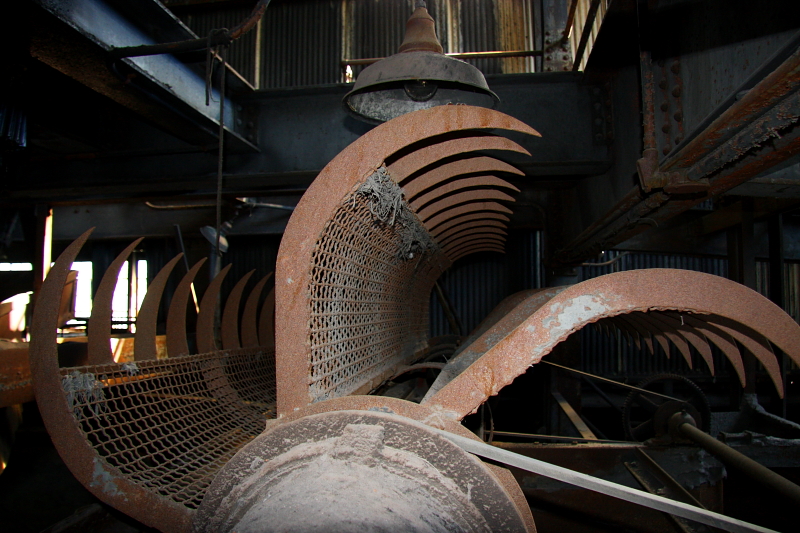
These gears give you some idea of the size of the motors required to drive such a conveyor belt, I can't imagine how many tons of coal it could carry at one time up to the top of the breaker, where it would work its way back down to ground level while undergoing considerable bashing and thrashing in all sorts of ungodly machines.
.
.
.
.
.
.
.
The interior of the building was an incredible labyrinth of catwalks and stairs, platforms around the massive machinery required for the gritty work of breaking coal.
.
.
.
.
.
.
.
Cryptic messages denoting some sense of past order, now meaningless, yet enchanting. Number eight, number eight, number eight. What dost thou mean, great yellow eight ?
.
.
.
.
.
.
.
There were some machines it was obvious you would not want to fall into them while they were turning. They had a decidedly unfriendly air about them.
.
.
.
.
.
.
.
The senseless sense of past order gone awry, the cone feeders are no longer needed, the sizing screens are no longer seen, the silence is overwhelming. I cannot imagine the awful din that must have reigned within those walls when the coal came thundering down the chutes into the brutal beating bars of the berserk breaking machines.
.
.
.
.
.
.
.
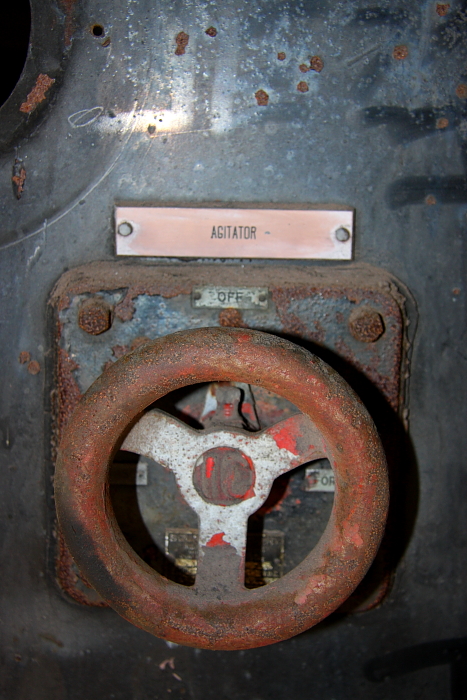
The Agitator control. Turn the wheel and a gas is realeased causing all who breathe it to become extremely agitated, to the point where straight jackets may be required. I think someone left the valve open these past few years. A frightening thought.
.
.
.
.
.
.
.
Bob Dylan wrote a song named, "Everything is Broken". The evidence was plain to see here.
.
.
.
.
.
.
.
An office which had obviously seen better days. I guess the white marks all over the place were bird droppings. A final indignity, to finish its days covered deeper and deeper in bird excrement. Maybe someday someone will go and mine for guano there.
.
.
.
.
.
.
.
I took one last look back as I drove off. Perhaps one day we shall return here, even if only virtually, these photos are just the tip of the iceberg (or should I say the tip of the slag heap) of what was taken there that day one year ago. Thanks again Tom for the tip that led to this trip !
.
.
.
.
.
.
.
.
.
.
.
.
In the heart of the old Pennsylvania coal country, there stands a gritty town by the name of Mahanoy City. I must say at the outset that it is highly unlikely I would have ever visited Mahanoy City, were it not for the kind and generous counsel of TomB., who has been mentioned before in these pages, and will no doubt be mentioned again. It was exactly a year ago today that I went to Mahanoy City after Tom pointed the way by whispering that there was a large abandoned coal breaker factory there, a site which could be visited if one were to tip toe quietly and not make too much of a ruckus. And so I went, setting out early one Saturday morning, and it became clear very quickly that Mahanoy City was a place which one could sincerely say had . . . True Grit. If you click the link to visit TomB.'s page, please scroll down to his post on September 7th, where he published one of his photos from the Saint Nicholas coal breaker at Mahanoy City.
.
.
.
.
.
.
.
.
.
.
.
.
.
.
It took me a little while to find the site, as in fact it is just outside Mahanoy City, but I caught a glimpse of it while going down a road out of town, and realized immediately that this must be the place.
.
.
.
.
.
.
.
Years ago when the site was active this little red building must have been a sort gatehouse, keeping track of who came in and who left, carrying what. Today it just stands in red ruin.
.
.
.
.
.
.
.
Heading into the larger buildings area, one very quickly finds oneself in the dark underbelly of the beast. The ground is still covered with the black dust and grit of Pennsylvania coal.
.
.
.
.
.
.
.
Vandals had not yet stolen this handle, though rust is working on the job.
.
.
.
.
.
.
.
A gaping hole in a wall, as though some structure had been ripped away by a frightfully angry dinosaur, leaving innards hanging out in the sun.
.
.
.
.
.
.
.
A facade rising eleven floors up toward the sky, windows broken out on every level. Such is the fate of abandoned factories. Windows are easy targets for thrown stones. We live in a world where it is easier to simply walk away from a building, a factory, a living entity, leaving it to rust, rot, and ruin, rather than trying to invest in refurbishing it to prevent such scenes of total desolation. Note the structure which joins the main building high up at the upper right : the coal conveyor.
.
.
.
.
.
.
.
Stepping back a bit to try to put it in perspective, the coal conveyor arrives about ten floors up from the ground level.
.
.
.
.
.
.
.
Having walked a few hundred yards away from the main coal breaker building, the coal conveyor goes by high above this outlying shack.
.
.
.
.
.
.
.
Even farther away, a small building still stands near the starting point of the coal conveyor, an ancient desk refuses to give in to gravity, standing, still standing.
.
.
.
.
.
.
.
Here you get a better idea of the length and height of the coal conveyor, which carried raw coal ten floors up to fling it into the maw of the monstrous machines that would break it down into different sized grades.
.
.
.
.
.
.
.
You may call me crazy, you may call me an idiot, you may wonder about my sanity, but the call of that conveyor tunnel was too strong for me to resist, I remember thinking : what better way to get up to the top floor of the factory ? I found a way in, and began the long, arduous climb up the entire length of that cramped shaft. It seemed to go on forever.
.
.
.
.
.
.
.
From the conveyor shaft windows I could see people working at the still active coal mine on the hill across the way. I kept a low profile by the windows so as not to draw unwanted attention. The conveyor bed was still littered with crumbled bits of coal.
.
.
.
.
.
.
.
Funny, from near the top there was a great view, and power generating wind turbines dotted the hills around, overlooking another abandoned coal building. The times they are a'changing.
.
.
.
.
.
.
.
These gears give you some idea of the size of the motors required to drive such a conveyor belt, I can't imagine how many tons of coal it could carry at one time up to the top of the breaker, where it would work its way back down to ground level while undergoing considerable bashing and thrashing in all sorts of ungodly machines.
.
.
.
.
.
.
.
The interior of the building was an incredible labyrinth of catwalks and stairs, platforms around the massive machinery required for the gritty work of breaking coal.
.
.
.
.
.
.
.
Cryptic messages denoting some sense of past order, now meaningless, yet enchanting. Number eight, number eight, number eight. What dost thou mean, great yellow eight ?
.
.
.
.
.
.
.
There were some machines it was obvious you would not want to fall into them while they were turning. They had a decidedly unfriendly air about them.
.
.
.
.
.
.
.
The senseless sense of past order gone awry, the cone feeders are no longer needed, the sizing screens are no longer seen, the silence is overwhelming. I cannot imagine the awful din that must have reigned within those walls when the coal came thundering down the chutes into the brutal beating bars of the berserk breaking machines.
.
.
.
.
.
.
.
The Agitator control. Turn the wheel and a gas is realeased causing all who breathe it to become extremely agitated, to the point where straight jackets may be required. I think someone left the valve open these past few years. A frightening thought.
.
.
.
.
.
.
.
Bob Dylan wrote a song named, "Everything is Broken". The evidence was plain to see here.
.
.
.
.
.
.
.
An office which had obviously seen better days. I guess the white marks all over the place were bird droppings. A final indignity, to finish its days covered deeper and deeper in bird excrement. Maybe someday someone will go and mine for guano there.
.
.
.
.
.
.
.
I took one last look back as I drove off. Perhaps one day we shall return here, even if only virtually, these photos are just the tip of the iceberg (or should I say the tip of the slag heap) of what was taken there that day one year ago. Thanks again Tom for the tip that led to this trip !
.
.
.
.
.
.
.
.
.
.
Subscribe to:
Posts (Atom)