Showing posts with label graffiti world war one. Show all posts

Saturday, November 3, 2012

Armistice Day Arriving

.
.
.
The 94th anniversary of the end of World War One is coming up on November 11th, a national holiday here in France. A fitting time to post a few photos from a couple of sites I had the good fortune to visit recently, thanks to a chance meeting at a stone quarry in the middle of nowhere with two gentlemen also interested the history of what was called "la Grande Guerre"... the Great War. Near the town of Noyon the ruins of a chapel destroyed during the war still remain, with a cast iron Christ within which fell during the shelling. As he suffered some 2000 years ago, so too did his replica suffer nearly 100 years ago in this chapel which stood immediately adjacent to the trenches of the front lines. It is surprising the sculpture was not more heavily damaged, as artillery shells fell like rain in that area.
.
.
.
.
.
.
.
.
.
.
.
.
.
.
.
.
.
.
.
.
.
.
.
.
.
.
.
.
.
.
.
.
.
.
More cast iron work in the chapel, with autumn colors, and the iron Crucifixion figure at upper left.
.
.
.
.
.
.
.
In the cemetery at Thiescourt, also near the front lines, a memorial to those dreadful years... 1914 to 1918.
.
.
.
.
.
.
.
.
.
The gate to the German cemetery at Thiescourt.
.
.
.
.
.
.
.
.
During the first world war the German army allowed soldiers of Jewish faith to serve. Things would change not long thereafter.
.
.
.
.
.
.
.
.
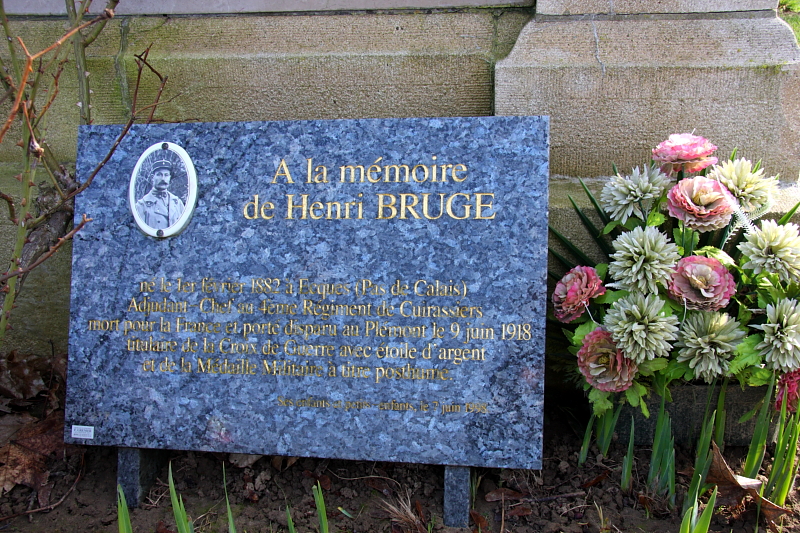
"To the memory of Henri Bruge. Born the 1st of February 1882 at Ergues in the Pas de Calais, Adjutant Chef in the 4th Regiment of Cuirassiers, died for France, reported missing in action at Plémont on 9 June1918, awarded the War Cross with silver star and the Military Medal posthumously"
.
.
.
.
.
.
.
.
At the entrance to the old stone quarries near Dreslincourt, occupied by the Germans for three years during the war. They left Gothic inscriptions carved on the outside stone walls, later shattered when they tried to blow up a nearby entrance to the quarry. The words carved here were part of a poem, saying :
.
"The world might be torn apart
Every oath like straw
I know a word like iron
It's called soldiers loyalty"
.
In German "soldiers loyalty" was one word : Soldatentreu
.
.
.
.
.
.
.
.
Another German sign carved above an entrance to the stone quarries, a labyrinthine series of tunnels that go on for kilometers underground... it would be very easy to get lost in there. I was lucky to have a good guide who knew the place well.
.
.
.
.
.
.
.
.
Graffiti from the war years... they didn't have spray paint cans back then, so they carved instead.
.
.
.
.
.
.
.
In the woods outside unexploded artillery shells can still be found lying about. Chilling reminders of the not so distant past here.
.
.
.
.
.
.
.
.
An imperial eagle carved on an exterior quarry wall.
.
.
.
.
.
.
.
.
.
More German, to the effect that the German soldiers feared only God.
.
.
.
.
.
.
.
.
Inside the miles of tunnels there were signposts, here indicating the way to the Command Post Calypso.
.
.
.
.
.
.
.
.
Boots from the war still remain undisturbed deep in the tunnels.
.
.
.
.
.
.
.
.
A wonderful French rooster carved on a wall to honor the 324th Infantry Regiment.
.
.
.
.
.
.
.
.
Near one of the entrances to the quarry tunnels.
.
.
.
.
.
.
.
.
German barbed wire from the war, rusting but still ready to unroll and use apparently. Maybe a bit fragile now, but still looking nasty.
.
.
.
.
.
.
.
.
More artillery shells found in farm fields nearby, waiting to be collected by the munitions disposal service which still remains busy nearly 100 years later.
.
.
.
.
.
.
.
.
.
.

Monday, October 15, 2012

Return to the Future Past . . .

.
.
.
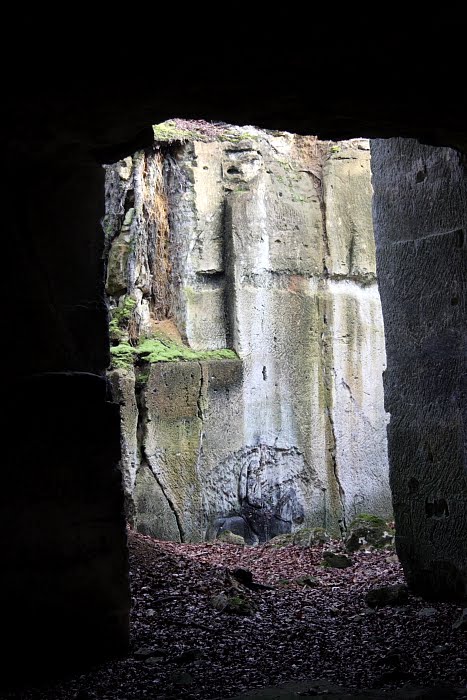
Here are a few more photos from the same site that the photo currently entered in a contest was taken at (see below post, and please vote), out in a stretch of woods in northern France that not many people ever visit, where there are dozens of large sculptures carved in the stone of an old quarry, which date from the First World War. You can also see more pictures of this site here. Sadly, this little known site is out in a remote forest, exposed to the weather, and the magnificent artwork here is slowly but surely disappearing. I'm going back there tomorrow to make another series of photos to help document what's left. Wish you could come...
.
.
.
.
.
.
.
.
.
.
.
.
.
.
.
.
.
.
.
.
.
.
.
.
.
.
.
.
.
.
.
.
.
.
.
.
.
.
.
.
.
.
.
.
.
.
.
.
.
.
.
.
.
.
.
.
.
.
.
.
.
.
.
.
.
.
.
.
.
.
.
.
.
.
.
.
.
.
.
.
.
.
.
.
.
.
.
.
.
.
.
.

Monday, February 28, 2011

The End of an Age . . .

.
.
.
In the news today on CNN's website there was a story about a very old, old man who passed away yesterday at the age of 110. Frank Buckles was the last remaining living American veteran from World War One. Born in February 1901, he enlisted at the age of 16, lying about his age to military recruiters. According to the internet, there are still two WWI veterans alive today, one in England, and the other in Australia, 109 and 110 respectively. Seems amazing that anyone can live that long, and even more amazing, the history they witnessed in their lifetime, practically the entire twentieth century. Rest in peace, Mr. Buckles.
.
At the same WWI site we visited recently, reported on in the post just a couple back, about a walk in the woods, this headless stone angel was trying to break free from the block of rock which emprisoned her, to break free and fly, like the soul of an old veteran who has finally shrugged off his mortal coil.
.
.


.
.
.
Here is another angle on the stone sphynx which graced that surprisingly poignant place.
.
.


.
.
.
In the same quarried out chamber where the stone altar was, depicted in the earlier post, was a bas relief soldier who'd set down his pack and rifle.
.
.

.
.
.
Just a few kilometers away from the sculpture garden quarry site deep in the woods, in the small Picardy village of Plessiers de Roye, there stand the ruins of a chateau which was destroyed in the Spring offensive of 1918, and was never razed nor rebuilt. Stones left standing in mute testament to the horrors of warfare.
.
.


.
.
.
Every wall of that once lovely place was pockmarked with bullet and shell scars.
.
.


.
.
.
In the town's cemetery a tombstone for a WWI victim bore a first name I'd never seen before anywhere . . . "Elisée". Like "les Champs Elysées".
.
.

.
.
.
Just up the road from the ruined chateau, there is another stone quarry site, also used for a troop shelter in WWI, as the sign on the battered down heavy wood doors attests. This quarry goes much deeper and farther underground than the site where the sphynx was. Only a short way from the entrance one find's oneself in complete pitch black darkness. Best to bring good lights.
.
.


.
.
.
Hundreds of yards up one of the underground quarry tunnels there is an altar carved into the stone wall, not unlike the one at the other site. There may be some war victims buried somewhere in the quarry galleries, as this plaque on the wall would seem to confirm. The fading writing says : "Here rests Eugene Blondet, Aspirant in the 162nd Infantery Regiment, Died for France on 10 June 1916, Age 19 years old.
.
.


.
.
.
This is the altar deep in an underground cavern of the "Carrière Mallet", or Mallet Quarry.
.
.

.
.

.
The rustic Christ on the altar's cross is rather fascinating, with large hands and hair in the breeze.
.
.


.
.
.
One of the few sources of information (in French) I could find about the Carrière Mallet contained this postcard image from the war, when the quarry was used not only as a shelter but also as a field medical station.
.
.

.
.
.
We visited the quarry that day with Peter (of Peter's Paris renown), while in the dark of the tunnels he shot this photo of me. Thanks Peter for your excellent company !
.
.

.
.
.

Friday, February 18, 2011

A Winter Walk In the Woods of the Past . . .

.
.
.
As you may have realized by now, if you've been keeping up with these pages for any length of time, one of my areas of interest is the history of World War One, and especially the surviving artwork associated with that awful conflict. One branch of that domain is the poetry which emerged from those war years, particularly that of Robert William Service, a Scot turned Canadian who served as an ambulance driver during the war, and who wrote a volume of poetry titled Rhymes of a Red Cross Man, which in my humble opinion is nothing short of excellent. Good reading for long winter nights.
.
Another branch on the tree of subjects related to WWI artwork is the sculpture and graffiti left behind by troops in various places, often on the walls of stone quarries which served as troop shelters. Quite some time ago, before anyone had even started visiting this obscure blog, I wrote a couple of posts about a gentleman named Jean Cartier who created two fabulous books about the remaining visible traces of WWI. Over a span of roughly 8 years and 30000 kilometres traveled, he visited and photographed hundreds of sites in Belgium and France where traces of WWI are still visible. You can see some of Jean Cartier's work on his website.
.
It was largely thanks to Jean Cartier's books that la Grenouille and I set out yesterday to find one of the sites documented in those volumes. The location of his photographs was not divulged in the book; it took quite a bit of research, some questioning of local residents, and some hiking in the woods before a leafy path curving up a hill finally led us to the place we were looking for.
.
.


.
.
On arriving at the quarry site, one is greeted by a large stone sphynx's face. We wondered if the nose had been broken off in order to echo the famous sphynx at Gizeh which also lost it's nose at some point in history. This sphynx was carved in the rock by a sculptor named Cadars in 1915. Despite the disfiguration of missing nose, and some idiot's initials or name carved in the face, it still stands enigmatic, powerful, mysterious in the forest, inspiring considerable awe.
.
.


.
.
Venturing further into the old quarry, from a distance there is a work which almost resembles a bear, in the ancient tradition of cave decorations done by pre-historic man.
.
.


.
.
Drawing closer, it is in fact a mounted military rider, the part that looked like a bear from a distance is the rock that had to be removed to give relief to the sculpture. I'm wondering if the bear image was just a coincidental result. The horse is wading through last autumn's leaves.
.
.

.
.
Another horseman, sadly with broken legs, graces a surface. Apparently (according to one site) this is a depiction of Marechal Joffre, who commanded the French forces from 1914 to 1917.
.
.


.
.
Rounding another corner one comes face to face with a large sculpture representing Joan of Arc, also missing her nose. A powerful figure nevertheless. As we visited the site our exclamations of astonishment rang out frequently, it is simply one surprise after another; simply amazing that a site overflowing with such wonderful art is far out in the woods, abandoned to the ravages of weather and vandals. This work deserves to be protected for posterity. IMHO a temple of sorts should be built around and over it to protect it. With guardians.
.
.


.
.
Troops during the war lived in dreadful conditions, and probably thought often and longingly of women. This pair of parisian ladies are similar to what might have been seen in fashion magazines of the period. They compose one of the loveliest bas relief sculptures I've ever seen anywhere.
.
.


.
.
Under the daintily pointed foot the inscription says, "Zut, voilà qu'il pleut"... "Drat, it's starting to rain !"
.
.

.
.
Another lovely goddess has bunches of grapes in her hair ; symbolizing a longing for wine, women, and song ? The inscription by her bared breast says 1916. I couldn't help falling a little in love with her.
.
.


.
.
In one of the quarry caverns an altar for religious services was carved in the wall, flanked by memorials to people who may have perished there or nearby. Such quarries were often used for medical posts. In the woods above the quarry there is a cemetery. Some of the people named here may be buried there. Unfortunately tombstones from the cemetery have been stolen by unscrupulous thieves. This simple place of worship was quite sobering and humbling.
.
.

.
.
The author of the sphynx also sculpted this "Croix de Guerre", a French military decoration for bravery.
.
.


.
.
The below sign was hanging near the Joan of Arc sculpture, stating that anyone removing anything from the site or causing any damage could be subject to being imprisoned.
.
.

.
.
I wondered if the act of dragging and abandoning an automobile in such a place would qualify the guilty party for a few months or years in jail ? What do you think ?
.
.

.
.
.